Commercial Concrete Repair: Common Problems and When to Take Action
Cracking, settlement, spalling, and drainage problems on commercial slabs, and how to decide when a repair or a new pour is due.
By Blueth LLC
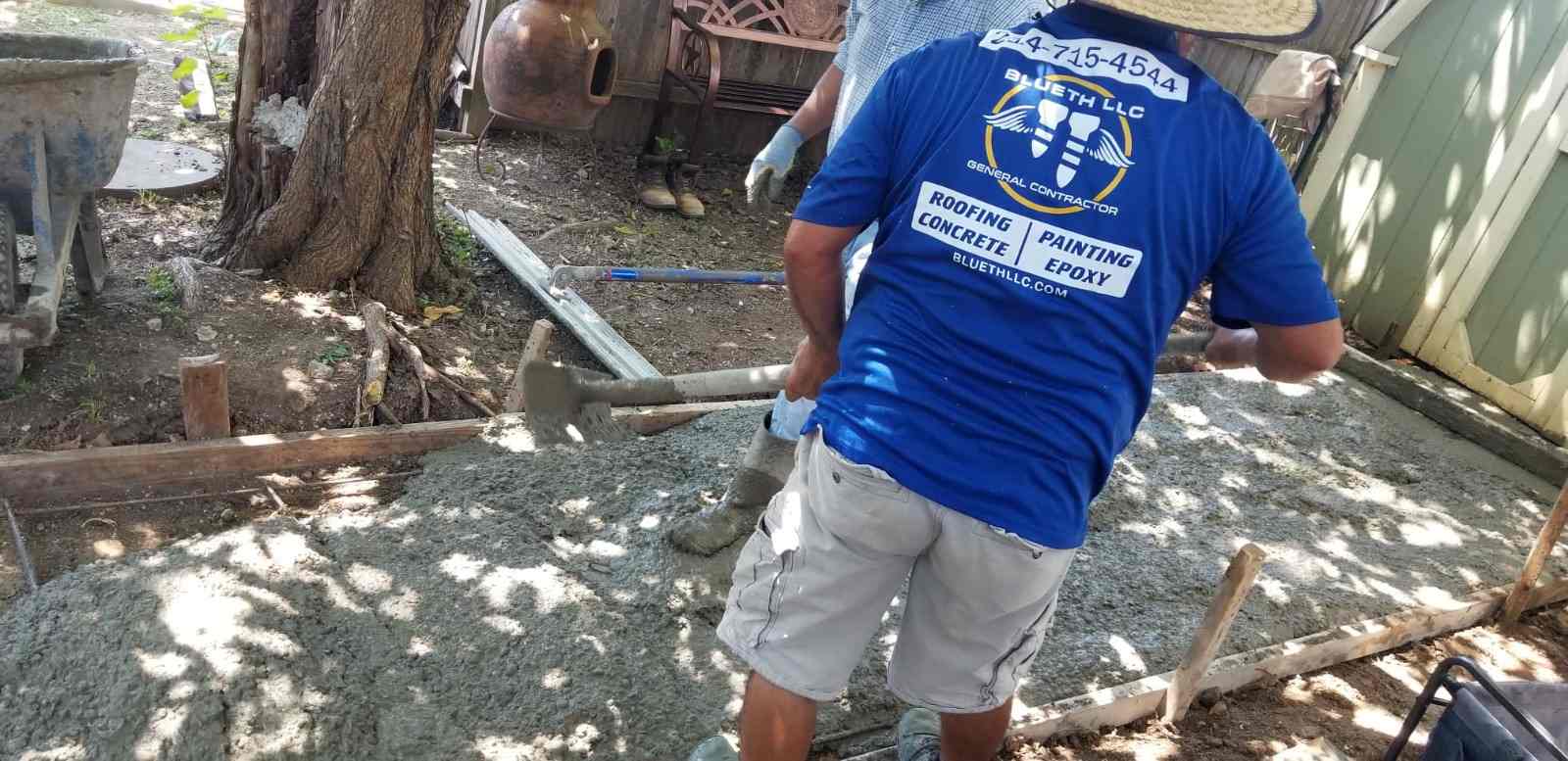
Commercial concrete repair in Grand Prairie, TX usually starts as a complaint about something else: a cart that jars at the sidewalk joint, water that stands at the storefront after a storm, a dock approach that has dropped away from the building. The slab is doing two jobs at once, carrying traffic and shaping where water goes. When it cracks or settles, both jobs suffer.
Blueth LLC places concrete for commercial and residential properties across Dallas-Fort Worth, including slabs, driveways, walkways, aprons, and foundations. The concrete service page describes that work. This article is about reading the slab you already have, so a repair or a new pour is timed on the condition, not on a guess.
Not every crack is an emergency. Concrete cracks because it shrinks, because the base moves, and because loads concentrate at joints that were never cut. The American Concrete Institute's overview of cracking is a useful background on why cracks form and why they are not all the same defect. What follows is the field version for a property manager walking a site in DFW.
Cracks worth measuring
Hairline cracks that are stable, dry, and not offset can often be watched. Photograph them with a ruler or a coin in the frame and look again in a few months.
Act sooner when you see:
- A crack that has opened enough to catch a cart wheel or a shoe.
- Vertical offset, where one side of the slab is higher than the other. That is a trip edge, and it usually means the support under one side has moved.
- Cracks that radiate from a corner, a drain, or a column, especially if they keep lengthening.
- Material pumping out of a joint after rain or after truck traffic. Fines leaving the joint means the base is moving.
- A pattern of map cracking and surface scaling across a whole panel, which is a surface problem, not a single shrinkage crack.
Write down the location. "The crack by the door" is not a record. "The north walk, second joint from the entry, offset about the thickness of a quarter" is a record the next person can find.
Settlement and the base under the slab
Concrete is only as stable as what it sits on. A slab poured on poorly compacted fill, on a base that was washed out, or against a foundation that it was never tied to will settle on its own schedule.
At loading docks and dumpster pads, repeated truck loads find any soft spot. The panel rocks, the joint breaks, and the edge crumbles. Patching the top without rebuilding the base gives you a new patch on the same soft spot.
Near the building, settlement can reverse the slope. Water that used to run to the parking lot starts running toward the wall, the door, and the masonry. That is no longer only a concrete issue. It becomes a leak path into the building and a reason brick and mortar stay wet. If you see that pattern, read the masonry warning signs alongside the slab notes.
Spalling, scaling, and surface breakup
Spalling is concrete breaking away in flakes or chunks, often at joints, at the surface, or around embedded metal. Scaling is a thinner loss of the paste at the top. Both leave a rough surface that holds water and grows.
Common contributors on commercial sites include a weak surface from finishing while bleed water was still present, deicing salts, and freeze-thaw cycles that pop already-saturated concrete. North Texas is not a northern climate, but DFW does freeze, and wet concrete at the surface feels it. The ACI note on freezing and thawing explains the mechanism without asking you to diagnose a mix design from the parking lot.
Do not hide spalling under a thin resurfacer if the concrete below is loose. Sound the area. If it is hollow or breaking under a screwdriver, it has to come out. A bonded repair needs clean, solid edges. A panel that is spalled across most of its surface is often cheaper and more durable as a replacement pour.
Drainage and high-traffic surfaces
Flatwork should move water away from the building and off the walking surface. Ponding on a sidewalk is a slip problem. Ponding against a storefront is a building problem. Ponding in a truck court breaks the base because the water sits in the joints and the traffic pumps it.
Look after a rain, not only on a dry afternoon:
- Does water leave the walk within a reasonable time, or does it sit at the door?
- Are drains and trench grates clear of cups, mulch, and cigarette butts?
- Has a settled panel created a dam?
- Is irrigation overspray keeping the slab wet every morning and feeding algae and surface scaling?
Fixing drainage may mean a new slope, a replaced panel, or a drain that actually sits at the low point. It is rarely a coating.
High-traffic zones, entries, docks, dumpster enclosures, and drive lanes, deserve the first dollars. A crack in an unused corner of a pad can wait. A trip edge at the public entry should not.
Repair, replacement, or watch
Use a simple sort.
Watch stable hairline cracks and photograph them on a schedule.
Repair panels that are still supported, where the damage is at a joint or a limited spall and the surrounding concrete is sound. The repair has to be thick enough and edged into solid concrete. A feathered skim at a moving joint will come back in your hand.
Replace panels where the base has failed, the offset is a trip hazard across the walking path, previous patches have broken out, or the slope now sends water into the building. Blueth LLC's concrete work includes the site visit and an estimate for the scope you actually need, from a walkway or apron to a larger slab.
Ask the estimator to say what happens to the base, the joints, and the slope, not only how many square feet of concrete will be poured. Two prices with different base preparation are not the same bid. The guide to hiring a commercial contractor walks through how to compare those scopes.
Safety and timing
Close or mark an offset joint before someone trips, especially at a public entrance. If the slab is dropping away from a door threshold, look inside for staining and swelling finish floors. Concrete movement and interior water often arrive as one complaint.
Schedule flatwork with the weather and with the business. A dock approach that has to cure is a dock you cannot use. A storefront walk that is torn out on a Saturday may be your busiest day. Put that in the scope conversation early.
Seasonal building walks should include the concrete, not only the roof. Add the slabs, walks, and docks to the commercial maintenance checklist so settlement is caught while it is still one panel.
If you are in Grand Prairie or elsewhere in Dallas-Fort Worth and the flatwork is already offset, ponding, or breaking up, send photos and the address. A short look at the drainage and the base will tell you whether you are maintaining a crack or replacing a panel that can no longer do its job.
Questions property managers ask
- Are all cracks in a commercial slab a structural failure?
- No. Concrete shrinks as it cures, and hairline cracks are common. Cracks that are widening, offset vertically, letting soil pump up, or holding water against the building are the ones that need a contractor to look at the cause.
- Can a spalled driveway or dock just be coated?
- A coating over concrete that is already breaking apart will not hold. The loose material has to be removed and the cause, often weak surface paste, freeze-thaw, or salt and deicer use, has to be addressed. Sometimes the honest repair is a partial replacement.
- When is replacement smarter than patching?
- When the base has failed, the slab has settled enough to pond or trip, or previous patches are breaking out around the edges. A patch needs sound concrete and a stable base to bond to.
- Does Blueth LLC only pour new concrete?
- Blueth LLC installs commercial and residential flatwork, including slabs, driveways, walkways, and aprons, and can inspect damaged concrete to recommend repair or a new pour. The estimate is based on the site and the requested scope, not on a generic patch price.
Related articles
 Masonry
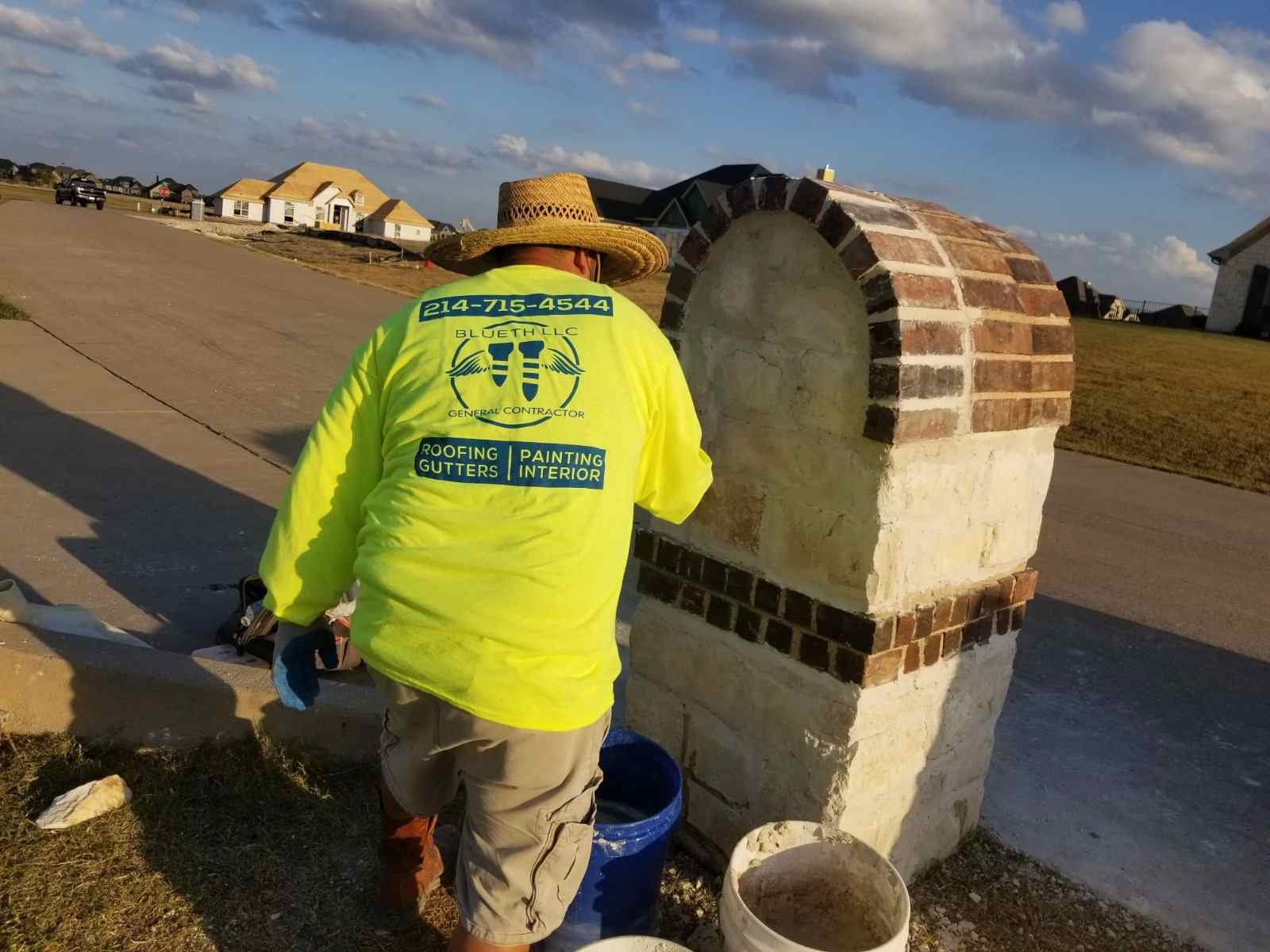
Commercial Masonry Repair: Warning Signs Property Owners Shouldn't Ignore
Cracks, mortar loss, and moisture stains on commercial brickwork, and when those signs call for an inspection.
Read More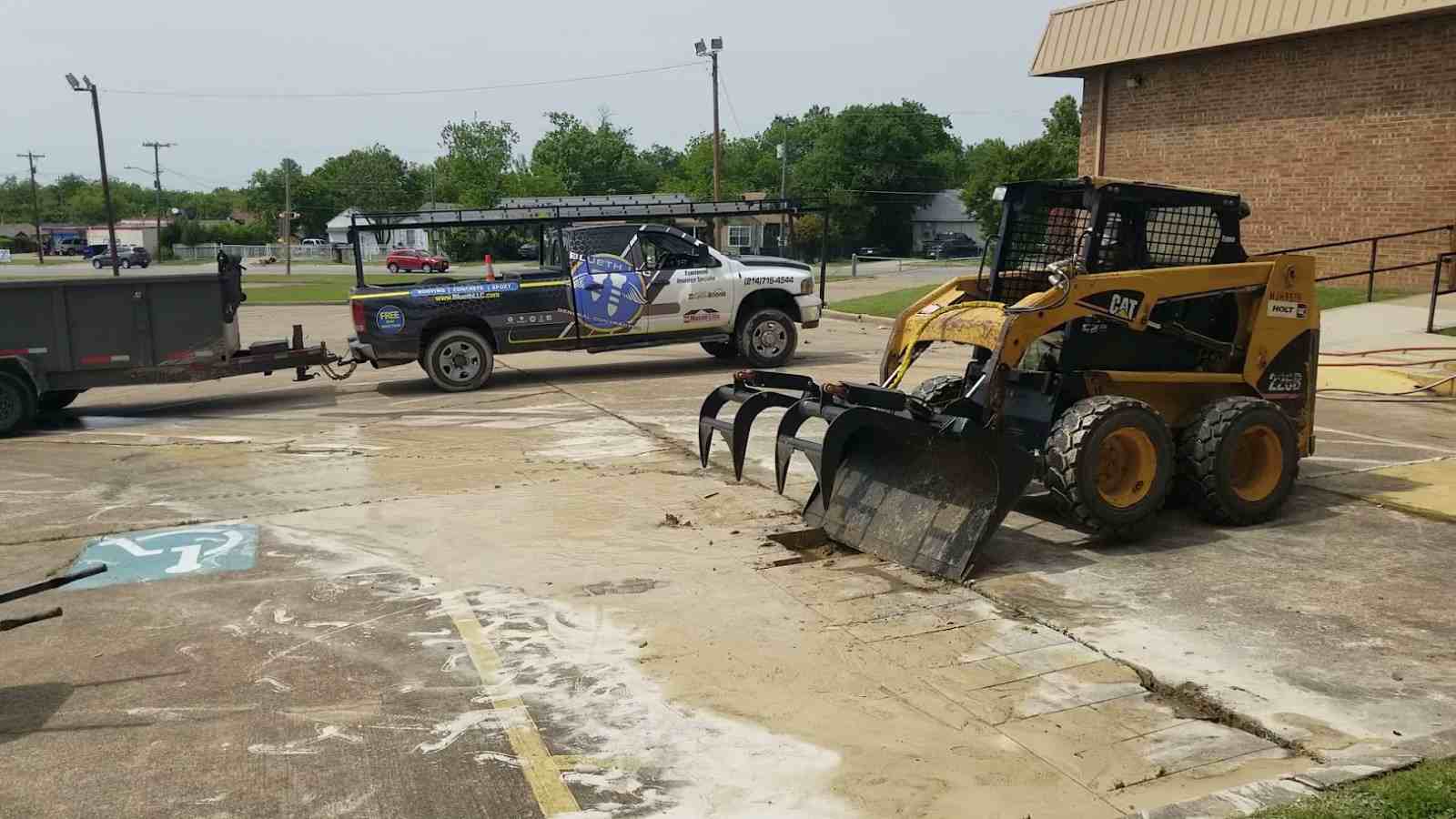 Guides
Commercial Building Maintenance Checklist for Property Managers
A seasonal checklist for roofs, drainage, concrete, walls, and rooftop equipment on Dallas-Fort Worth commercial properties.
Read More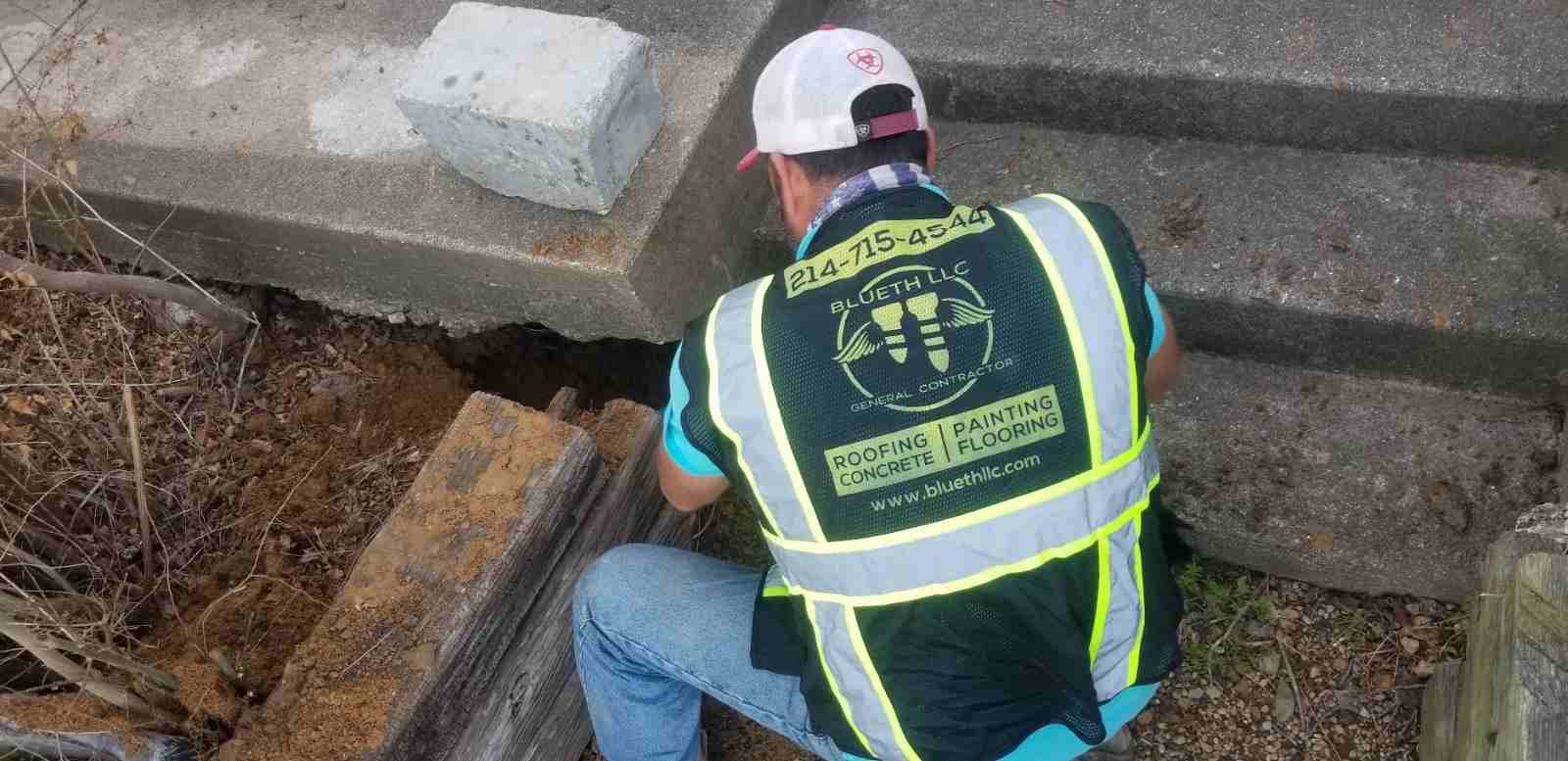 Construction
What to Look for When Hiring a Commercial Construction Contractor in Grand Prairie, TX
How property owners and managers in Grand Prairie can compare contractors on scope, insurance, schedule, and communication.
Read More