Commercial Masonry Repair: Warning Signs Property Owners Shouldn't Ignore
Cracks, mortar loss, and moisture stains on commercial brickwork, and when those signs call for an inspection.
By Blueth LLC
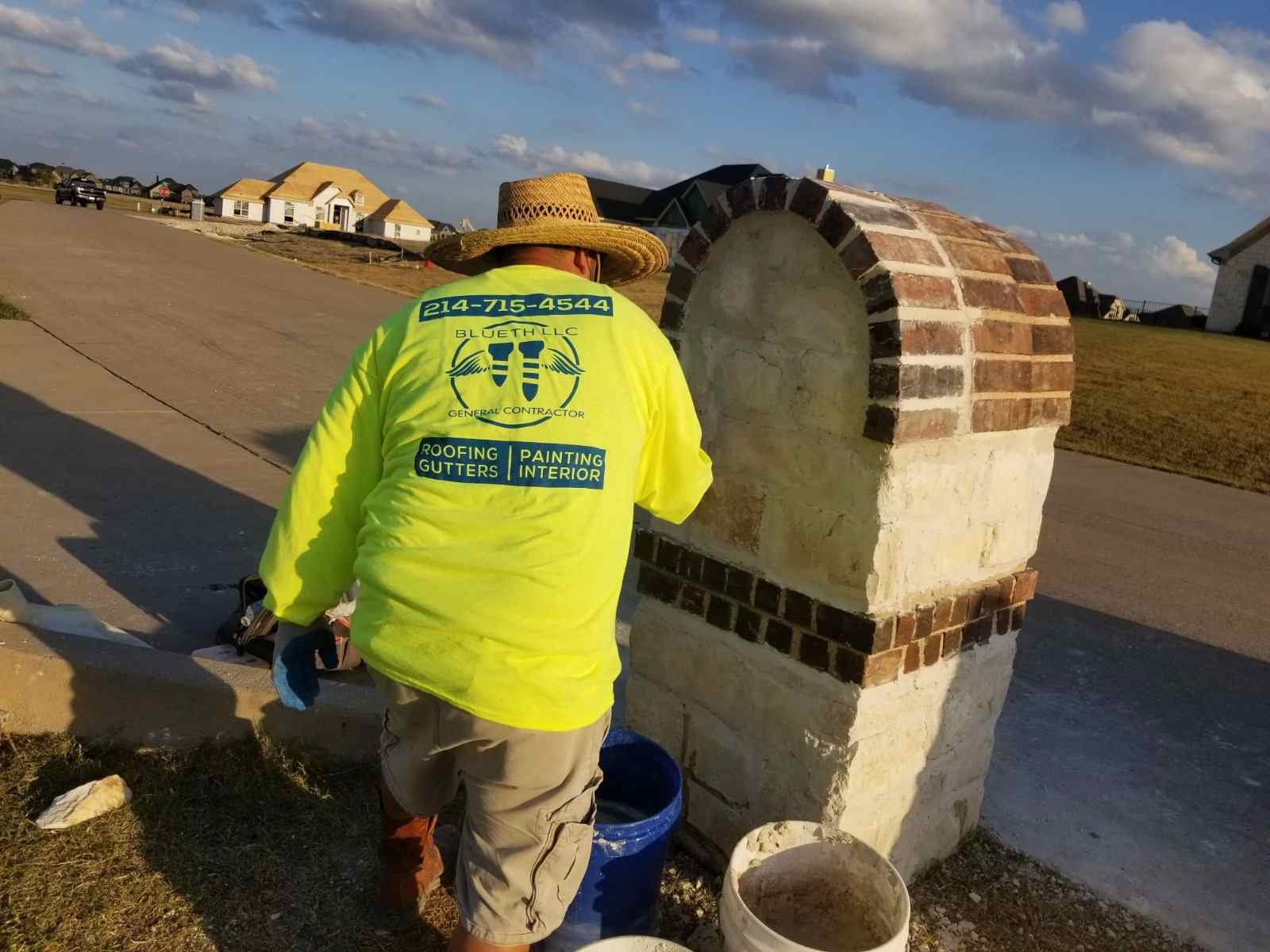
Commercial masonry repair in Grand Prairie, TX is usually postponed because brick fails slowly. A mortar joint turns sandy. A white haze shows up under a sill. A stair-step crack lengthens a little each season. None of it stops business on Monday, so it stays off the work order until a piece of face brick lands on the walk or water shows up inside the office.
Brick and mortar are a water-management system as much as a wall. The Brick Industry Association's technical notes collect the industry guidance on how brick walls are built, flashed, and expected to handle moisture. You do not need those notes in the field. You need to recognize when your wall is no longer doing what they describe.
Blueth LLC repairs and rebuilds masonry for exterior conditions across Dallas-Fort Worth. The scope is based on the wall in front of us, which is also how the masonry service is written. These are the signs that justify asking for that look.
Mortar that is leaving the wall
Sound mortar is hard, continuous, and close to the face of the brick. Failed mortar is recessed, cracked, or so soft that a key leaves a groove.
Open joints are a path for wind-driven rain. Water that enters the wall should meet flashing and weep out. Water that enters a wall with no working weeps stays in the core, stains the interior, and pops the face of the brick when temperatures drop. DFW does not freeze every week. It freezes often enough to punish a wall that is already saturated.
Repointing means cutting out the failed joint to a proper depth and packing new mortar that is compatible with the old masonry. Smearing a skim of mortar over the joint, feathered onto the brick face, looks tidy for a month and falls off. If a proposal says "pointing" and does not mention grinding or cutting the joints, ask what they are actually doing.
Cracks and what direction they run
Read the direction before you read anyone's theory.
Stair-step cracks that follow the joints, especially from the corner of a window or from the end of a lintel, mean the wall has moved relative to itself. Vertical cracks through brick and mortar can mean the same, or a control joint that was never built. A crack that is wider at the top than at the bottom often points to movement at a corner or a foundation line. A crack that is wider at the bottom deserves a look at the support under the wall.
Horizontal cracks or a bow in the wall are more serious. They can mean the wall is not tied back the way it should be, or that something is pushing it. Do not cover a bow with a skim coat. Photograph it from the side, in raking light, so the curve is visible.
Rust stains bleeding from a steel lintel over a window or door are a related warning. The steel is expanding as it corrodes and cracking the masonry around it. Pointing the brick without addressing the lintel repeats the crack.
The neighboring flatwork matters here. A slab that has settled away from the wall, or that now slopes toward it, keeps the base of the masonry wet. Read concrete problems if the walk or the soil line has changed. Walls and slabs often need one plan.
Spalled and stained brick
Spalling is the face of the brick popping off. It starts where water is held: at sills, at grade, below a failed coping, under a scupper that dumps onto the wall. Once the face is gone, the softer interior of the brick soaks up more water and the damage speeds up.
White efflorescence is salt left behind when water moves through the masonry and evaporates. A light haze after a new wall is built can be residual salts. A heavy, returning crust on an older commercial wall means water is still moving through. Find the entry. Common sources are a roof edge with no drip, a clogged gutter, failed coping joints, and irrigation aimed at the brick.
Dark green or black biological growth at the base of a north wall says the surface never dries. That may be shade and irrigation, or it may be a roof discharge you have not noticed. Look up before you power-wash. Washing without stopping the water is a temporary change in color.
The EPA's guide to mold and moisture is worth sending to anyone who plans to clean an interior stain while the wall is still taking on water. The stain is the result. The joint, the coping, or the roof edge is the job.
Copings, flashings, and the roof connection
The top of a parapet and the joint where a roof meets a masonry wall are where commercial leaks pretend to be a brick problem.
Look for:
- Coping joints that are open or full of failed sealant.
- Copings without a drip, so water runs back onto the face of the wall.
- Roof flashings pulled out of the reglet or buried in roof cement.
- Weep holes at the base of a cavity wall that have been caulked shut or covered by a raised grade and mulch.
If the roof is dumping water onto the masonry, roof repair comes before or with the masonry, not after the new mortar is in place. Roof maintenance covers the edge and gutter side of that same water path.
What an inspection should decide
A useful masonry visit answers four questions.
- Is the wall still plumb, or is it cracking and bowing because it is moving?
- Are the joints and copings keeping water out, or only looking closed from the street?
- Is water coming from the roof, the irrigation, the grade, or the wall itself?
- Is the repair repointing, brick replacement, rebuilding a section, or a lintel and flashing job?
Blueth LLC's masonry work starts with the existing condition and the scope you want, then an estimate. Photos of the full wall, a close-up of the joint or crack, and a note about interior stains are enough to begin. If several buildings systems are involved, the maintenance checklist is a way to organize the ask, and the hiring guide is a way to compare the proposal you get back.
When to stop watching
Watch a hairline joint crack that has not grown and is not associated with staining. Stop watching when mortar is sandy, brick faces are popping, cracks are lengthening or offset, lintels are rusting, or water is inside the building. Those are commercial masonry repair conditions in Grand Prairie and across DFW, not cosmetic preferences.
Send the photos when you want the wall looked at. The earlier the joints are repaired, the less brick you have to replace.
Questions property managers ask
- Is a stair-step crack in brick always a foundation problem?
- Not always. Stair-step cracks follow the mortar joints and can come from movement in the wall, from rusting steel lintels, or from settlement. The pattern tells you to investigate. It does not, by itself, name the cause or the repair.
- Can failed mortar be ignored if the brick still looks straight?
- Recessed or sandy mortar lets water into the wall. The brick can look aligned while the core of the wall gets wet, freezes, and starts to spall. Repointing is cheaper before faces of brick are lost.
- Should I seal the brick to stop moisture?
- A sealer on brick that is already wet, or on a wall with failed flashings and copings, traps moisture. Fix the water entry first. A coating is not a substitute for sound joints, copings, and flashing.
- What masonry work does Blueth LLC take on?
- Blueth LLC repairs and rebuilds masonry, including brick and mortar, after reviewing the existing condition and the requested scope. Send photos of the wall, the crack or spall, and any related roof or drainage issue so the estimate matches the building.
Related articles
 Concrete
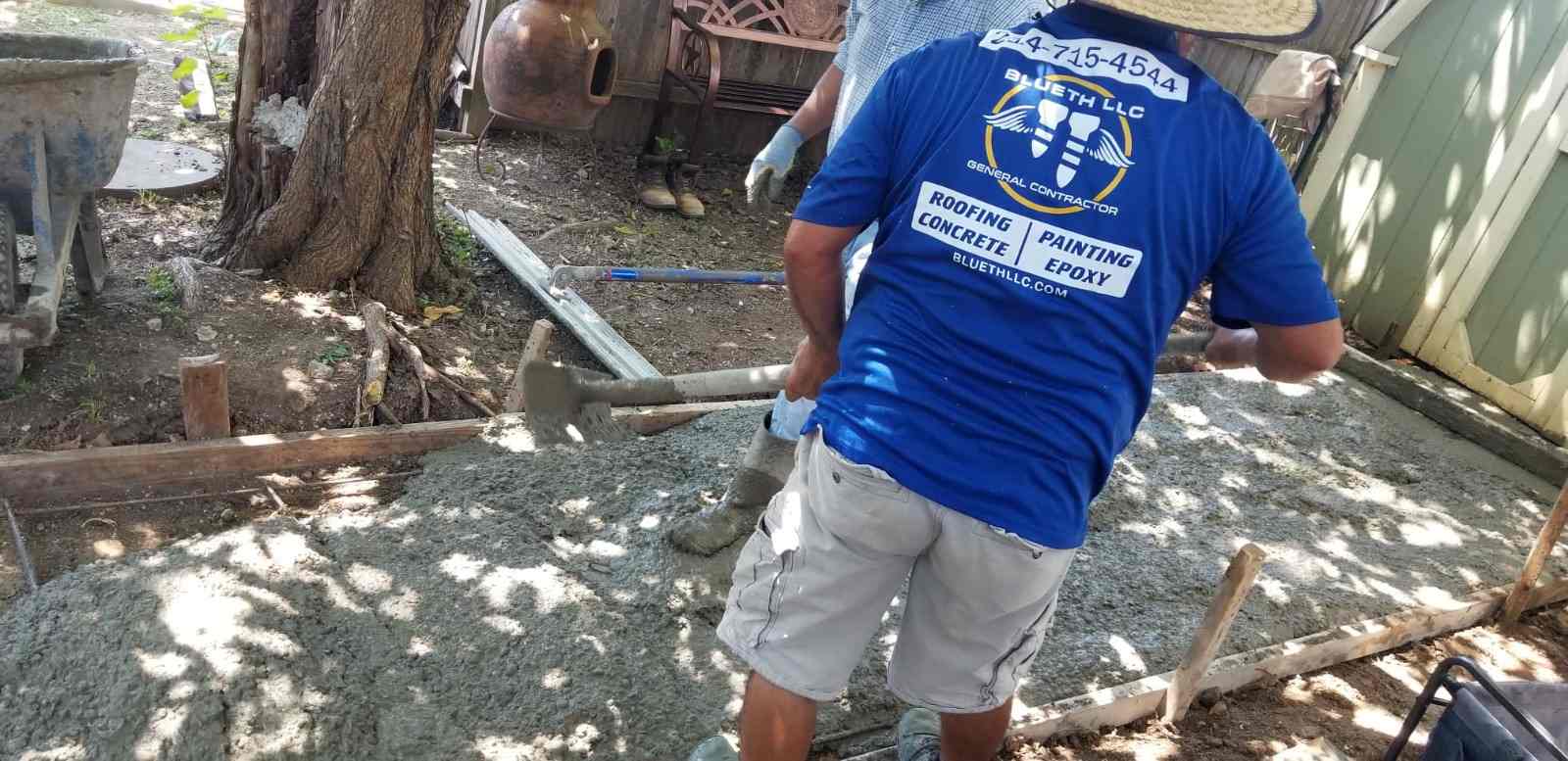
Commercial Concrete Repair: Common Problems and When to Take Action
Cracking, settlement, spalling, and drainage problems on commercial slabs, and how to decide when a repair or a new pour is due.
Read More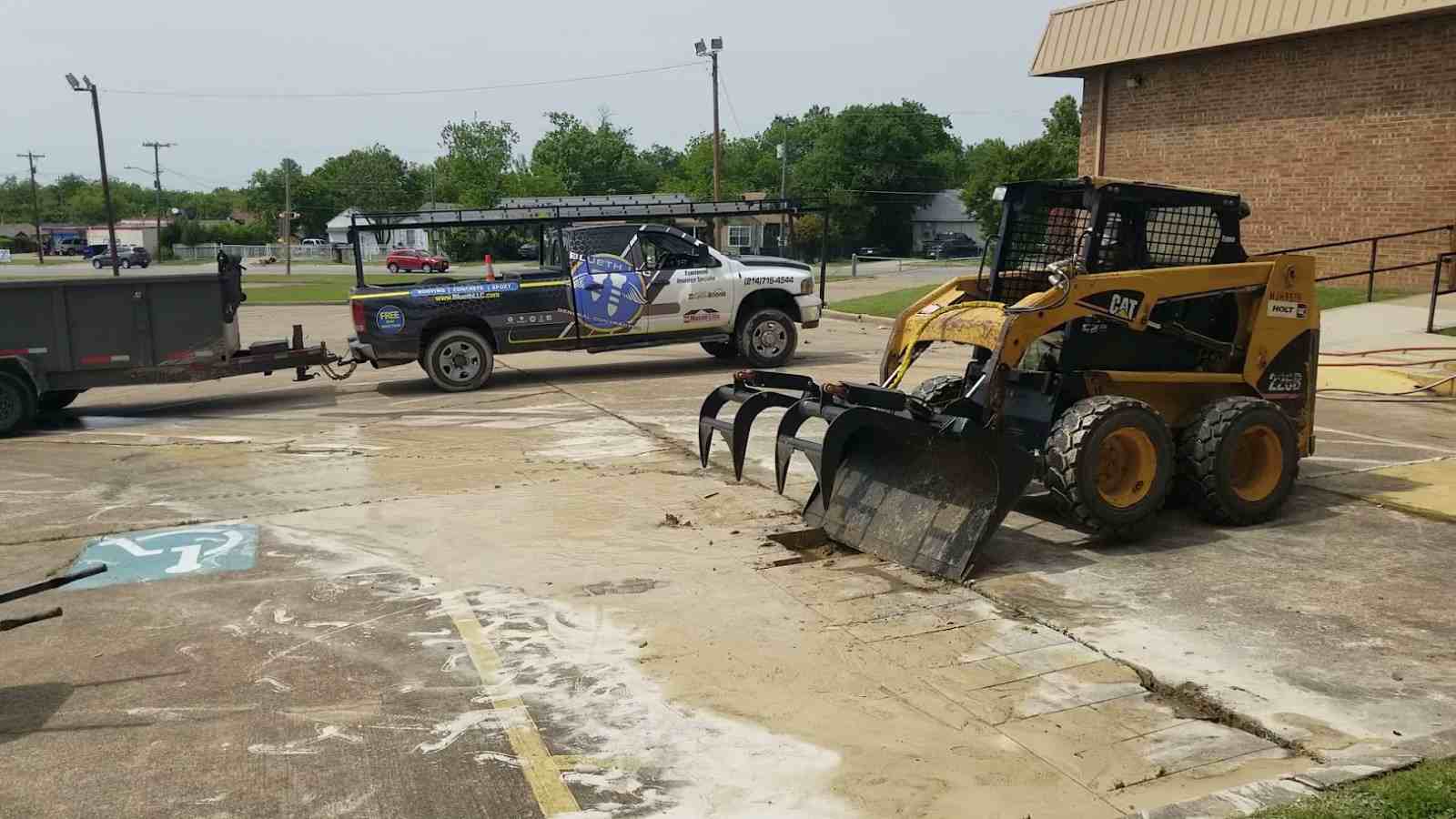 Guides
Commercial Building Maintenance Checklist for Property Managers
A seasonal checklist for roofs, drainage, concrete, walls, and rooftop equipment on Dallas-Fort Worth commercial properties.
Read More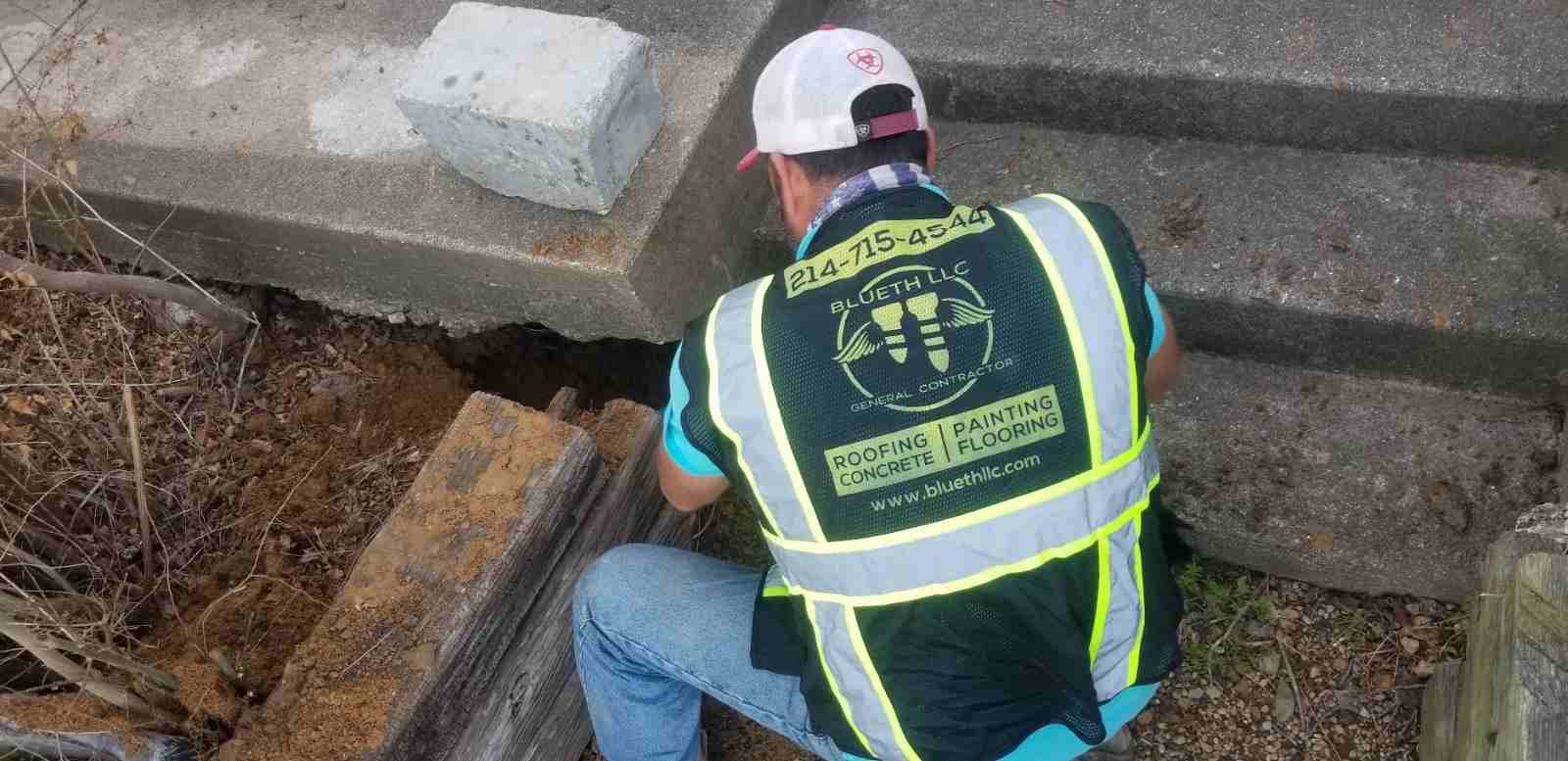 Construction
What to Look for When Hiring a Commercial Construction Contractor in Grand Prairie, TX
How property owners and managers in Grand Prairie can compare contractors on scope, insurance, schedule, and communication.
Read More