How to Know When Your Commercial Roof Needs Repair or Replacement
Learn the key signs of roof damage, what to look for during inspections, and how to extend the life of your commercial roof.
By Blueth LLC
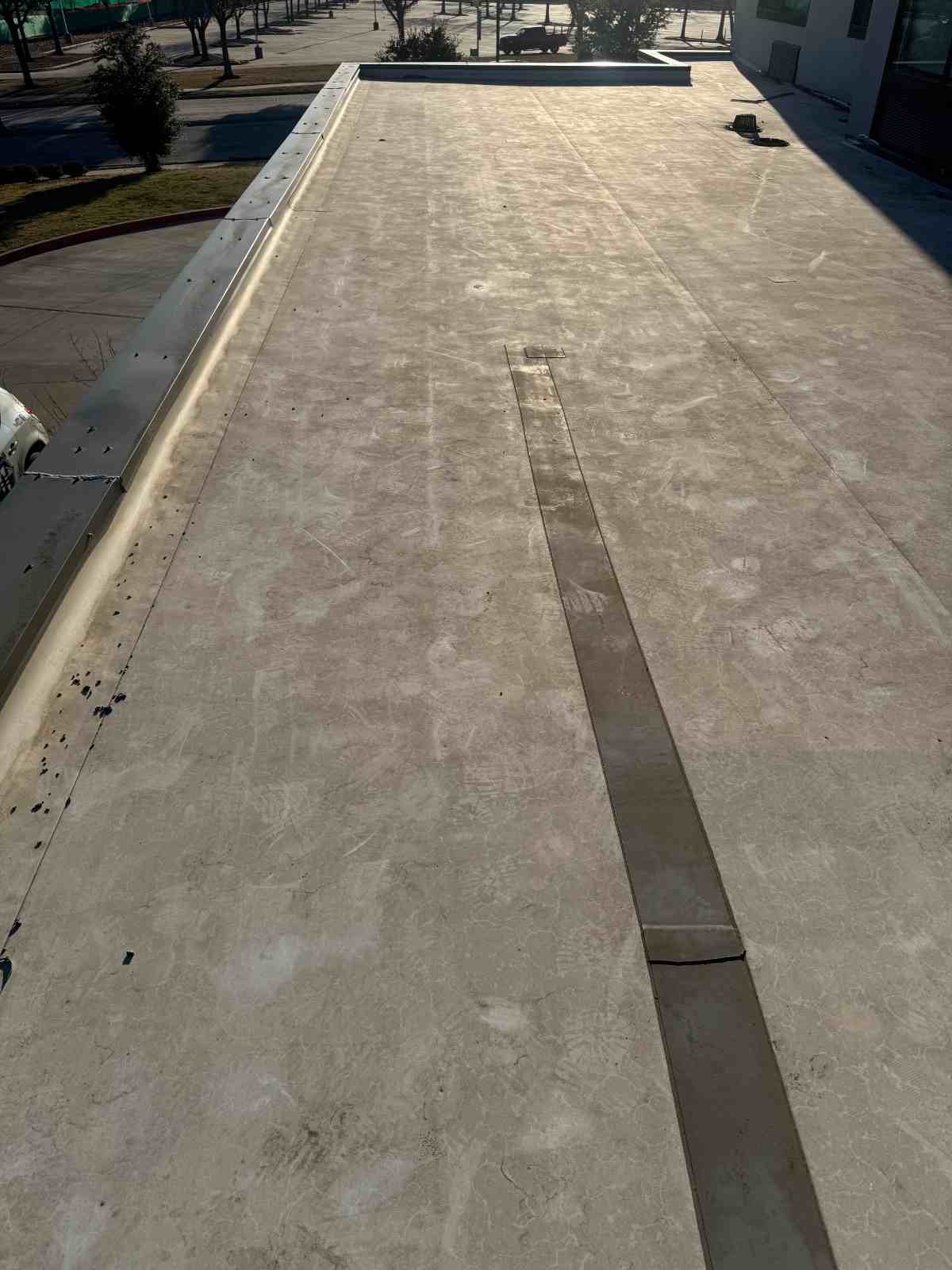
A commercial roof rarely fails in one dramatic moment. On low-slope buildings around Grand Prairie and the rest of Dallas-Fort Worth, water usually finds a small opening first: a split seam, a loose flashing, a drain that no longer sits at the low point. By the time a stain shows up on a ceiling tile, the membrane above it may have been wet for weeks.
Commercial roof repair in Grand Prairie, TX starts with that distinction. The visible stain is a symptom. The decision to repair or replace depends on how widespread the moisture is, how old the system is, and whether the deck and drainage can still do their jobs. Blueth LLC's commercial roofing work is built around an inspection, photos of the conditions, and a scope that matches what is actually failing.
What the roof is supposed to do
A commercial roof is a system, not a single sheet. The membrane keeps water out. Flashings close the joints at walls, curbs, and pipes. Drains and scuppers move water off the surface. The cover board and insulation sit under the membrane, and the deck carries the load.
When one piece fails, the others are asked to compensate. A clogged drain holds water against a seam. A split flashing lets wind-driven rain in at the wall. Insulation that has taken on water loses its shape and creates a new low spot. Treating only the ceiling stain, and leaving the rest, is how a small repair turns into a repeat call.
Signs that point to repair
Many leaks are local. These are the conditions that often stay in the repair column after an inspection:
- A single stain that lines up with one pipe, curb, or corner, and the rest of the ceiling is dry.
- Open lap seams or fishmouths in a limited area, with the surrounding membrane still flexible and well attached.
- Punctures from foot traffic, dropped tools, or HVAC work, with sound membrane around the hole.
- Deteriorated sealant at a few penetrations, while the field of the roof is intact.
- Loose sheet-metal flashing that can be reset and resealed without replacing the membrane.
A repair is the right scope when the opening is identifiable, the surrounding membrane will hold a patch, and the deck underneath is solid. Patching a wet, spongy area just to cover the symptom usually fails at the next hard rain.
Membrane wear that is no longer local
Age shows up as a pattern, not a single hole. On modified bitumen and built-up roofs, look for widespread cracking, exposed reinforcement, and blisters that have broken open. On single-ply membranes, look for shrinkage that pulls flashings tight, brittle laps, and fastener backs-out that tent the sheet.
Walk the perimeter. Wall flashings take more movement than the field of the roof because the wall and the deck do not expand the same way. If counterflashing is missing, rusted through, or buried in old roof cement, water is already using that joint.
Roof cement smeared over a seam is a clue, not a fix. It can slow a leak for a season. It also hides the original opening and makes the next inspection harder. If a roof has several generations of mastic and the leaks keep moving, the membrane is telling you the repair area is larger than the last patch.
Ponding water
Standing water is one of the clearest field checks on a low-slope roof. After the surface has had time to dry, water that is still pooled over seams, fasteners, or a softened patch is working on the waterproofing every hour it sits there.
Ponding has a cause. The drain may be above the surrounding roof because of a bad taper. Debris may have blocked the strainer. A unit curb or a new sleeper may have interrupted the slope. Insulation that got wet in an older leak can settle and create a birdbath that was not in the original design.
Do not read every shallow film of water as a failure. Some low-slope roofs hold a thin sheet until the sun and wind take it. The problem is water that remains deep enough, and long enough, to sit on seams and debris. The National Weather Service thunderstorm guidance is a useful reminder of how quickly North Texas storms dump that water. Drainage has to be ready before the storm, not after the ceiling tile drops.
While someone is looking at drains, the edge metal and gutters deserve the same visit. Overflow that spills down a wall shows up later as masonry and interior damage. Gutter repair is often part of the same water path as the roof.
Storm and hail damage
Dallas-Fort Worth storms bruise commercial roofs in ways that are easy to misread from the ground. Hail can fracture a cap sheet, bruise a single-ply membrane, and dent metal copings without opening an obvious hole that day. Wind can lift a perimeter sheet and set it back down, leaving a weakened attachment that fails in the next gust.
After a hail or wind event, photograph the roof, the metal edge, and any interior stains before temporary tarps go down. Note the date of the storm. If an insurance claim is possible, the carrier will want that timeline. Blueth LLC can inspect the property, document visible conditions, and prepare an estimate. Coverage itself is the carrier's decision. Paying the deductible is separate from that coverage decision. Since September 1, 2019, Texas law has required the policyholder to pay it, which is explained in what the 2019 deductible law changed.
A storm scar and an aged-out roof are different problems that sometimes arrive together. Hail may have opened a roof that was already near the end of its service life. In that case the honest scope may be replacement of the damaged section, or of the whole roof, rather than a scatter of patches. The comparison is covered in repair versus replacement.
How to choose between repair and replacement
Use the inspection, not the calendar alone.
Repair fits when the defects are limited, the membrane away from those defects is still performing, the deck is dry and firm, and drainage can be corrected without rebuilding the assembly.
Replacement deserves a serious look when leaks recur in new places after competent repairs, when core cuts or obvious soft spots show wet insulation across a wide area, when flashings have shrunk or pulled away along much of the perimeter, or when the cost of chasing leaks is approaching the cost of a new system. Business disruption matters too. A building that cannot tolerate repeated interior leaks may be better served by one planned replacement than by a year of emergency calls.
There is a middle path. A recover, where a new membrane goes over a dry, sound existing system, is sometimes available and sometimes a bad idea. Wet insulation left in place stays wet. That call belongs in the inspection report, not in a guess from the parking lot.
What a useful inspection includes
Ask anyone you hire to get on the roof, not only to look at the ceiling. A useful visit records:
- Leak locations inside, matched as closely as possible to conditions above.
- Membrane type, approximate age, and the condition of seams and flashings.
- Drainage: strainers, scuppers, tapered crickets, and where water actually stands.
- Penetrations, equipment curbs, and recent HVAC or sign work that may have pierced the membrane.
- Deck condition where it can be seen or where soft spots suggest moisture.
- Photos that a property manager can file with the lease and the insurance record.
The NRCA roofing guidelines are the industry reference contractors use when they talk about roof assemblies, drainage, and flashings. They are not a substitute for looking at your building. They do give an owner a vocabulary for the estimate that comes back.
Interior moisture has a second cost. The EPA's brief guide to mold and moisture explains why wet materials should be dried and why the leak has to stop before any interior cleanup will hold. A roof repair that ignores a saturated deck, or a ceiling repair that ignores the roof, both come back.
When to call
Call for commercial roof repair in Grand Prairie, TX when water is active, after a hail or wind event, or when the same area has been patched more than once. Bring the photos and any prior invoices. If you are also planning rooftop equipment work, say so. Roofing and equipment openings are easier to coordinate in one scope than to discover in sequence.
See how Blueth LLC handles commercial roof inspections, repairs, and replacements across Grand Prairie and Dallas-Fort Worth. If you want a second set of eyes on maintenance before the next leak, the roof maintenance guide covers the visits that keep a sound roof in service. For a project that also includes walls, concrete, or other exterior work, start with the commercial services overview.
A clear inspection will not make an old roof new. It will tell you whether you are buying a repair that can last or a replacement you have already paid for in repeated leaks.
Questions property managers ask
- Does a ceiling stain always mean the commercial roof needs replacement?
- No. A stain shows that water entered somewhere. The source can be a flashing, a penetration, a clogged drain, or a failed seam. An inspection has to find that source before anyone can say whether repair or replacement is appropriate.
- How quickly should a property manager respond to an active leak?
- The same day if water is reaching the interior, electrical equipment, or inventory. A temporary dry-in can limit damage while the permanent repair is scoped. Waiting for the next storm usually makes the opening larger.
- What should a Grand Prairie owner bring to a roof inspection?
- Leak locations, photos, the age of the roof if known, prior repair invoices, and any insurance correspondence. Interior photos taken during rain are especially useful because they show where water is showing up, not just where it is assumed to enter.
- Can Blueth LLC document storm damage for an insurance claim?
- Yes. Blueth LLC inspects commercial roofs across Dallas-Fort Worth, photographs visible conditions, and can provide that documentation while the carrier decides coverage. The inspection does not replace the carrier's own review.
Related articles
 Roofing
Texas Roofing Insurance Deductibles: What the 2019 Law Actually Changed
House Bill 2102 did not create roof deductibles. Effective September 1, 2019, it requires the policyholder to pay the deductible and bars contractors from waiving it.
Read More Roofing
Commercial Roofing Maintenance: How to Extend Your Roof's Lifespan
A practical maintenance plan for Dallas-Fort Worth commercial roofs, from drainage and flashings to storm follow-up.
Read More Roofing
Commercial Roof Repair vs. Replacement: Which Is Right for Your Building?
How to compare repair and replacement for a commercial roof using condition, leak history, age, cost, and disruption.
Read More