Commercial Roof Repair vs. Replacement: Which Is Right for Your Building?
How to compare repair and replacement for a commercial roof using condition, leak history, age, cost, and disruption.
By Blueth LLC
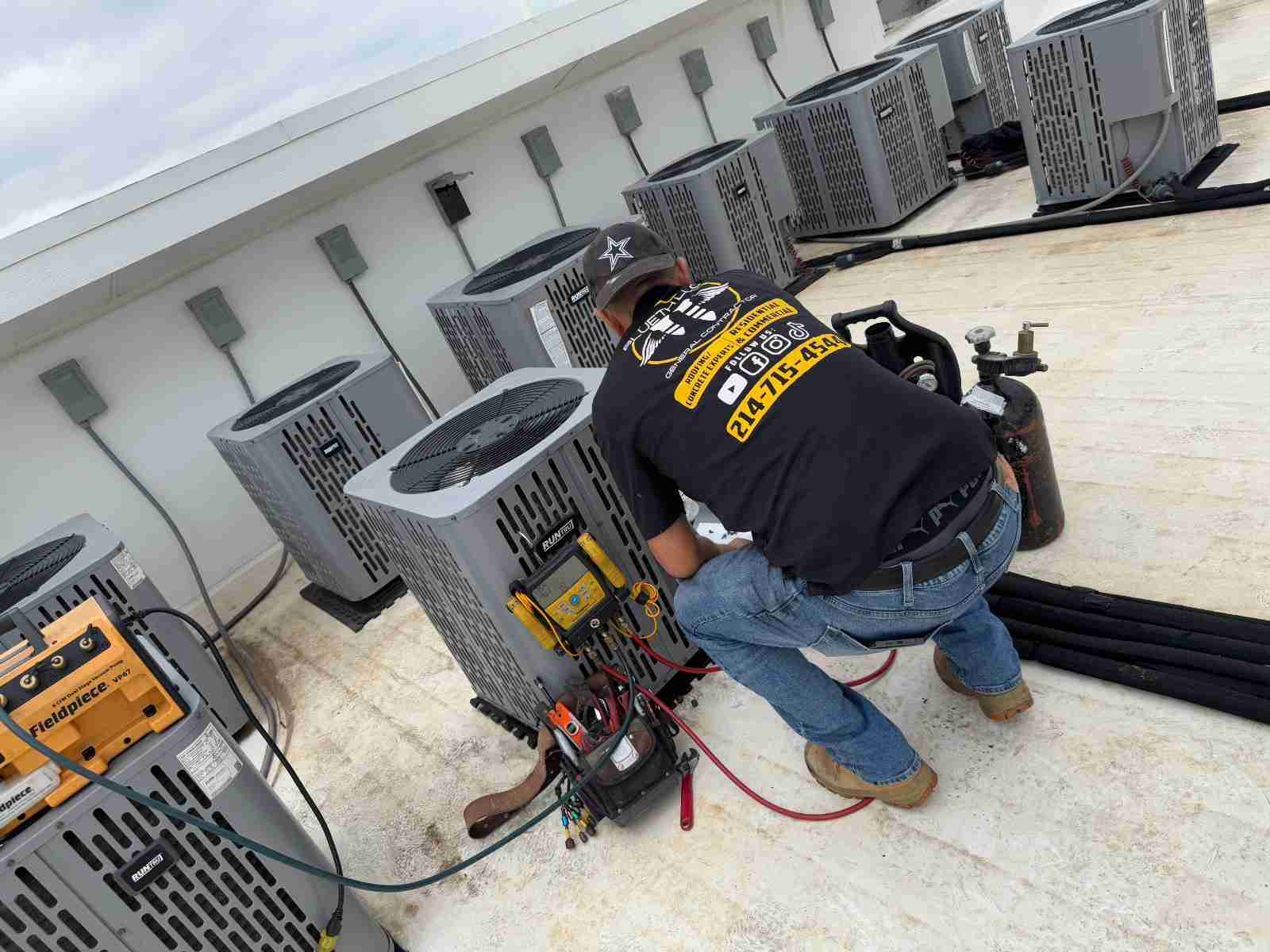
Commercial roof replacement in Dallas-Fort Worth is the right project when the roof can no longer be made reliable with repairs. It is the wrong project when a limited opening, a few failed flashings, or a drainage fix would put a sound membrane back in service. Owners waste money in both directions: replacing a roof that needed a disciplined repair, or funding another year of patches on a system that is wet and tired.
The choice should come from the building, not from a rule of thumb about age. This article compares the two scopes. For the field signs that start the conversation, read when a commercial roof needs repair or replacement. For the visits that keep a repaired or new roof in service, read roof maintenance.
Blueth LLC's roofing service covers inspections, repairs, and replacements for commercial property owners and managers across Grand Prairie and the Metroplex.
What you are actually comparing
A repair closes defined defects and corrects the drainage or flashing details that caused them. You keep the existing membrane everywhere it is still performing. The building sees a short project.
A replacement removes the existing system, or recovers over it when that is appropriate, and installs a new assembly with new flashings. You are buying a new service life and a warranty structure tied to that installation. You are also accepting staging, noise, and a longer period of weather exposure during the work.
A recover, a new membrane over a dry existing one, sits between them. It can be efficient. It is a poor bargain if it buries wet insulation. The inspection has to say whether the existing system is dry enough to leave in place. The NRCA roofing guidelines are the professional reference for how these assemblies go together. Your roof still needs someone to open a core or otherwise confirm moisture where the surface looks suspicious.
Condition first
Start with a map of what is failing.
Repair is the better fit when:
- Leaks trace to a limited set of penetrations, seams, or one section of flashing.
- The field of the membrane is flexible, attached, and free of widespread cracking or exposed reinforcement.
- The deck is firm and there is no broad evidence of wet insulation.
- Ponding has a local cause you can correct, such as a clogged drain or a missing cricket, not a collapsed area of insulation.
Replacement deserves the lead when:
- Leaks show up in new locations after competent repairs.
- Soft spots, stained deck, or test cuts show moisture across a large area.
- Flashings are shrunk, split, or pulled away along much of the perimeter.
- The surface has widespread breakdown, not a punch list of isolated holes.
- Previous patches overlap each other and the leak history no longer has a single source.
Age supports the story. It should not overrule a dry, well-detailed roof, and it should not be used to talk an owner into keeping a saturated one.
Leak history is evidence
Pull the work orders. If the same corner has been opened three times, the repair is not addressing the cause, or the surrounding membrane can no longer hold one. If every call is a different suite after every storm, the system is leaking in a pattern, and a pattern is a replacement conversation.
Write the history into the request for an estimate. A contractor who sees only today's stain will price today's stain. A contractor who sees five years of moving leaks can price the roof you actually have.
That file belongs with the rest of the building record described in the maintenance checklist.
Cost, read as a series of checks
The repair price is not only the invoice in front of you. Add the realistic chance of another mobilization, another interior cleanup, and another tenant complaint. A cheap patch that fails twice is more expensive than it looked, and it has already disrupted the building.
The replacement price should be itemized enough to compare. Tear-off versus recover, deck repairs if the deck is rotten where it is opened, new drains or reused drains, flashings, sheet metal, and who is responsible for equipment that has to be lifted. A single lump sum with none of those words is hard to compare with anything else.
Ask both options to be priced when the inspection shows a genuine fork in the road. Blueth LLC can document the conditions and estimate the scope you choose. Do not expect one number to describe two different projects.
Storm claims add a third document, not a third kind of roof. If hail or wind is part of the story, photographs and dates matter. The carrier decides coverage. The National Weather Service thunderstorm page is background on the kind of storms that produce those losses. It is not an adjuster's report. Your photos are.
Disruption and how the building stays open
Repairs can often be scheduled around a single area and finished in a short window. The risk is repetition. Occupants experience each visit as a new failure even when the crew is competent.
Replacement is planned disruption. Material has to be staged, the existing roof has to come off or be prepped, and the building has to be watertight at the end of every day. Tell the contractor the hours the building cannot tolerate noise or odors, and which entrances have to stay open. A restaurant, a clinic, and a warehouse do not have the same definition of a successful day.
Interior protection and communication are part of the scope. So is the plan if rain arrives mid-project. If that plan is "we'll see," you do not have a plan.
If the roof work will also move rooftop equipment, put that in the same schedule. HVAC coordination and roofing that are bid as strangers produce openings nobody owns. The HVAC maintenance article covers the curb and flashing side of that handoff.
A decision you can explain to an owner
Summarize the inspection in plain sentences.
The roof has local defects and a dry, intact field, so we are repairing those defects and the drainage that caused them. Or: the roof has widespread moisture and recurring leaks, so we are replacing the system and here is what that does to the building for the duration of the work.
Either sentence is easier to defend than "the contractor said it was bad." Take photos. Keep the leak log. Ask for the excluded items in writing.
Then put the new or repaired roof on a maintenance schedule immediately. Replacement is not a reason to ignore drains for five years. The maintenance guide is the follow-up, not an optional extra.
Next step
If you are deciding between commercial roof repair and replacement in Dallas-Fort Worth, request an inspection or send the address, leak history, and photos. The useful answer is a scope you can compare, tied to the conditions on your building, not a default replacement and not a patch that everyone already knows will be back.
Questions property managers ask
- Is there a set age when a commercial roof must be replaced?
- No. A well-drained roof that was installed correctly and maintained can outlast a newer roof that ponds water or was patched with roof cement for years. Age is one input. Moisture in the assembly and the condition of the flashings matter more.
- Will a coating save a failing commercial roof?
- A coating can be a legitimate surface treatment on a dry, well-attached membrane that the coating manufacturer will accept. It is not a fix for wet insulation, open flashings, or a deck that has lost strength. If the sales pitch skips those conditions, get a second inspection.
- How disruptive is replacement compared with repairs?
- Repairs are shorter and noisier in a small area. Replacement is a planned project with tear-off or a recover, material staging, and a longer period when the building must be kept watertight every night. For a tenant who has lived through repeated leak calls, one planned project is often less disruptive than a year of emergencies.
- Can Blueth LLC price both options?
- Yes. An inspection can support a repair scope and a replacement scope when both are plausible. Blueth LLC documents the visible conditions and estimates the work you approve. Insurance coverage, if a storm is involved, is still the carrier's decision.
Related articles
 Roofing
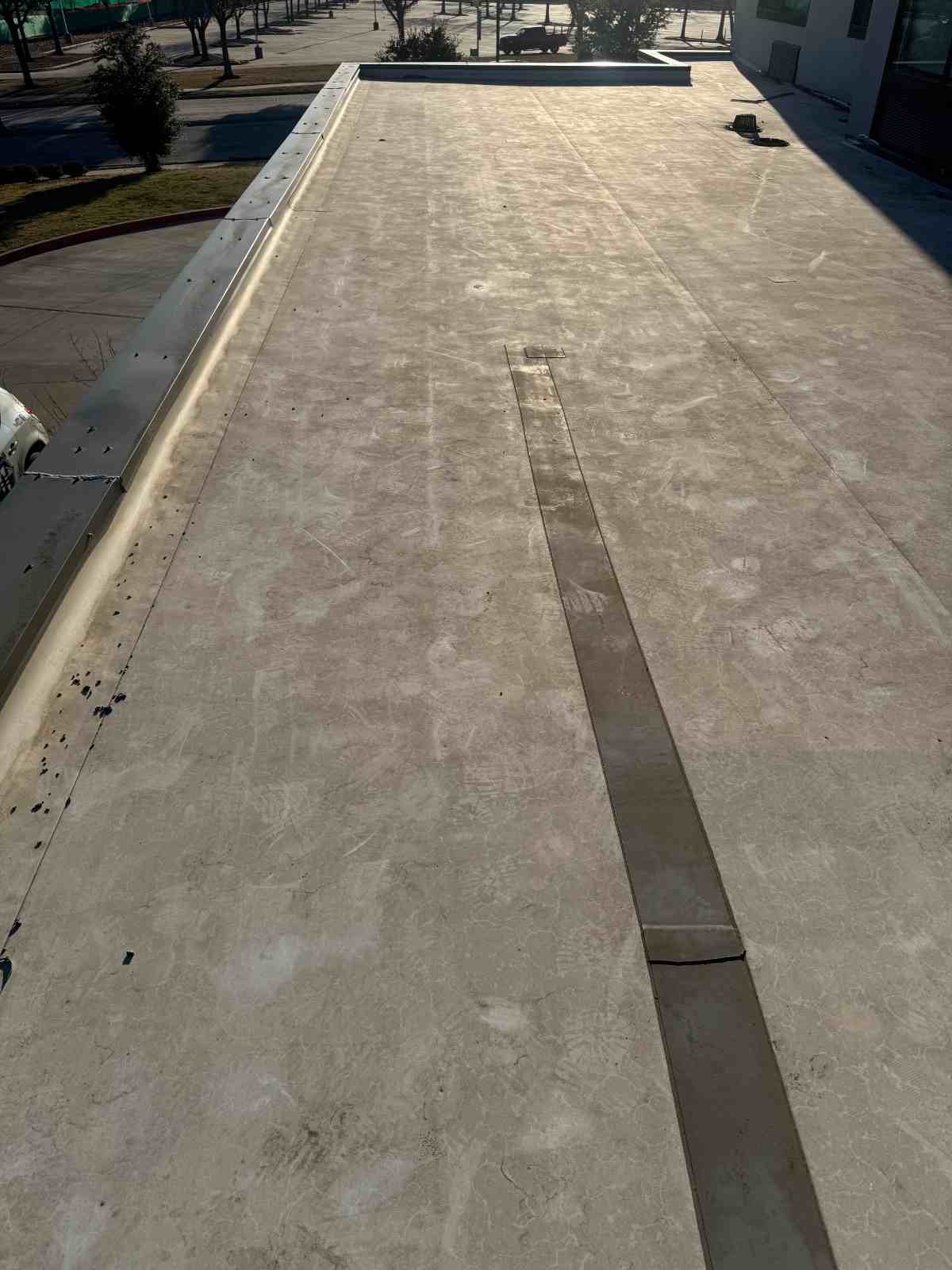
How to Know When Your Commercial Roof Needs Repair or Replacement
Learn the key signs of roof damage, what to look for during inspections, and how to extend the life of your commercial roof.
Read More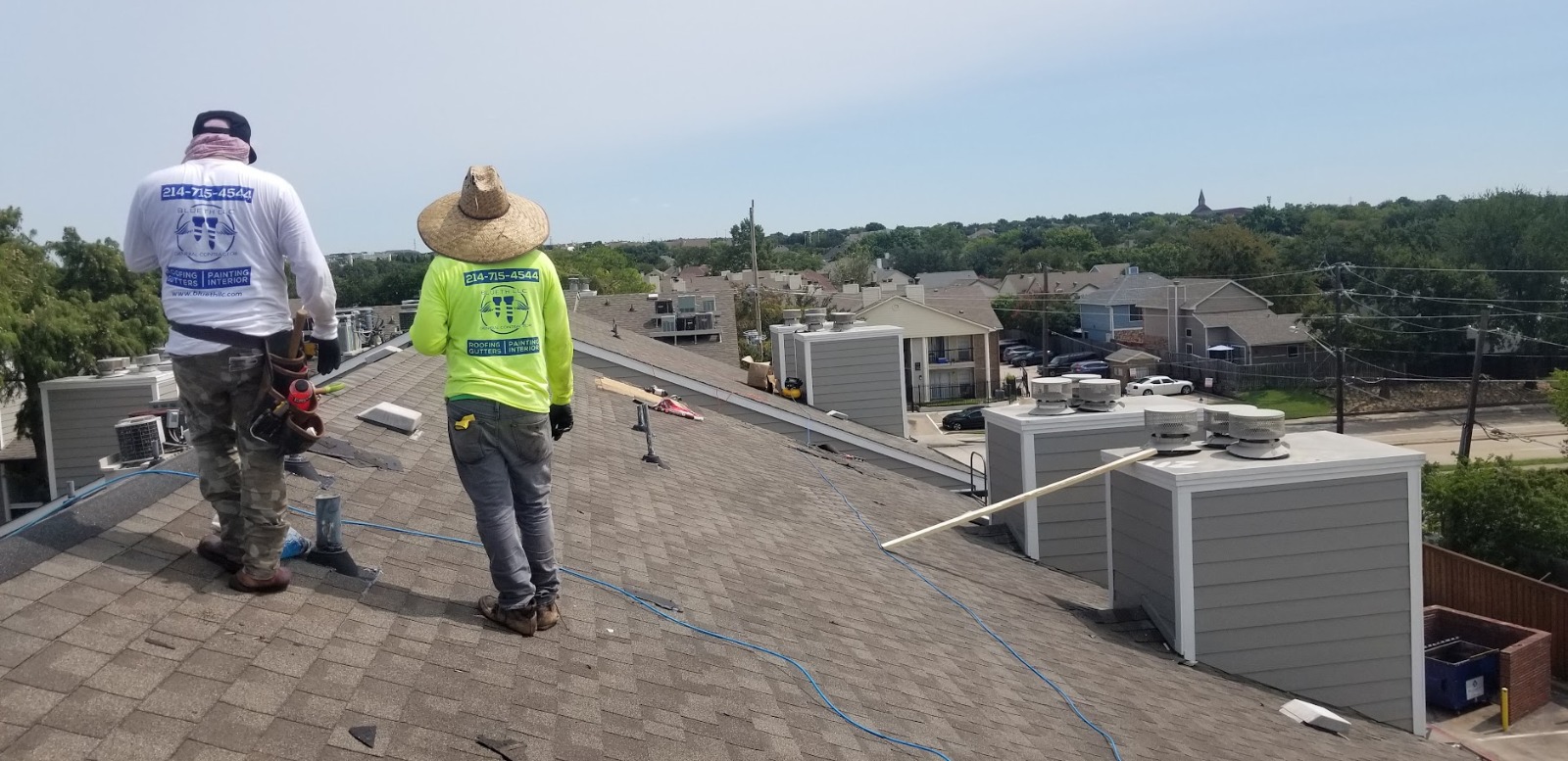 Roofing
Commercial Roofing Maintenance: How to Extend Your Roof's Lifespan
A practical maintenance plan for Dallas-Fort Worth commercial roofs, from drainage and flashings to storm follow-up.
Read More Guides
Commercial Building Maintenance Checklist for Property Managers
A seasonal checklist for roofs, drainage, concrete, walls, and rooftop equipment on Dallas-Fort Worth commercial properties.
Read More